



Occlusion & TMJ Disorders
Treatments
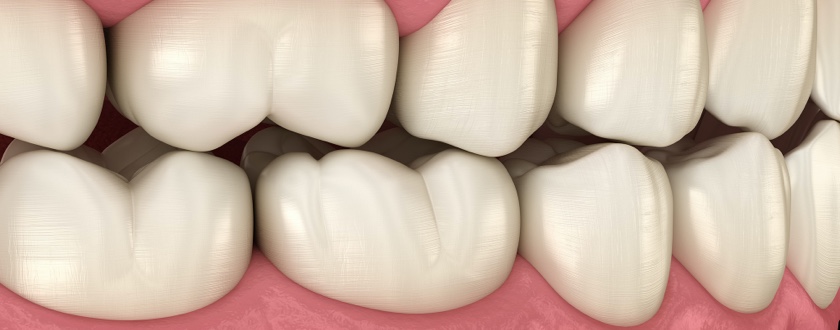
Occlusion refers to the alignment and interaction of the upper and lower teeth as they come together, while TMJ (temporomandibular joint) disorders involve issues with the jaw joint and surrounding muscles
Recognizing TMJ Symptoms
- Do you wake up every morning with muscle pain or stiffness in your jaw, neck, head and even your shoulders?
- Do you have pain when your jaw joint is clicking, popping or grating while opening and closing your mouth?
- Do you feel pain in your ear or pressure inside it?
- Do you have limited movement in your jaw?
- Does your jaw ever get stuck or locked as you open it?
Yes?
If you answer “yes” to some of these questions, you may have a “Temporomandibular Joint Disorder” commonly known as “TMJ Disorder”.
TMJDs are a set of clinical conditions characterized by a limitation in jaw movement and a pain in the jaw joint and surrounding tissues.
TMJ pain most often results from injuries, although in some cases the symptoms can start without any obvious reason. If your jaw suddenly locks — whether your mouth is open or closed — please contact us immediately so we can treat the problem as soon as possible.
Dr. Imad Benkhadra has extensive experience in treating people with TMJ problems. He works with several physiotherapists and chiropractors to provide a whole-body healing approach.